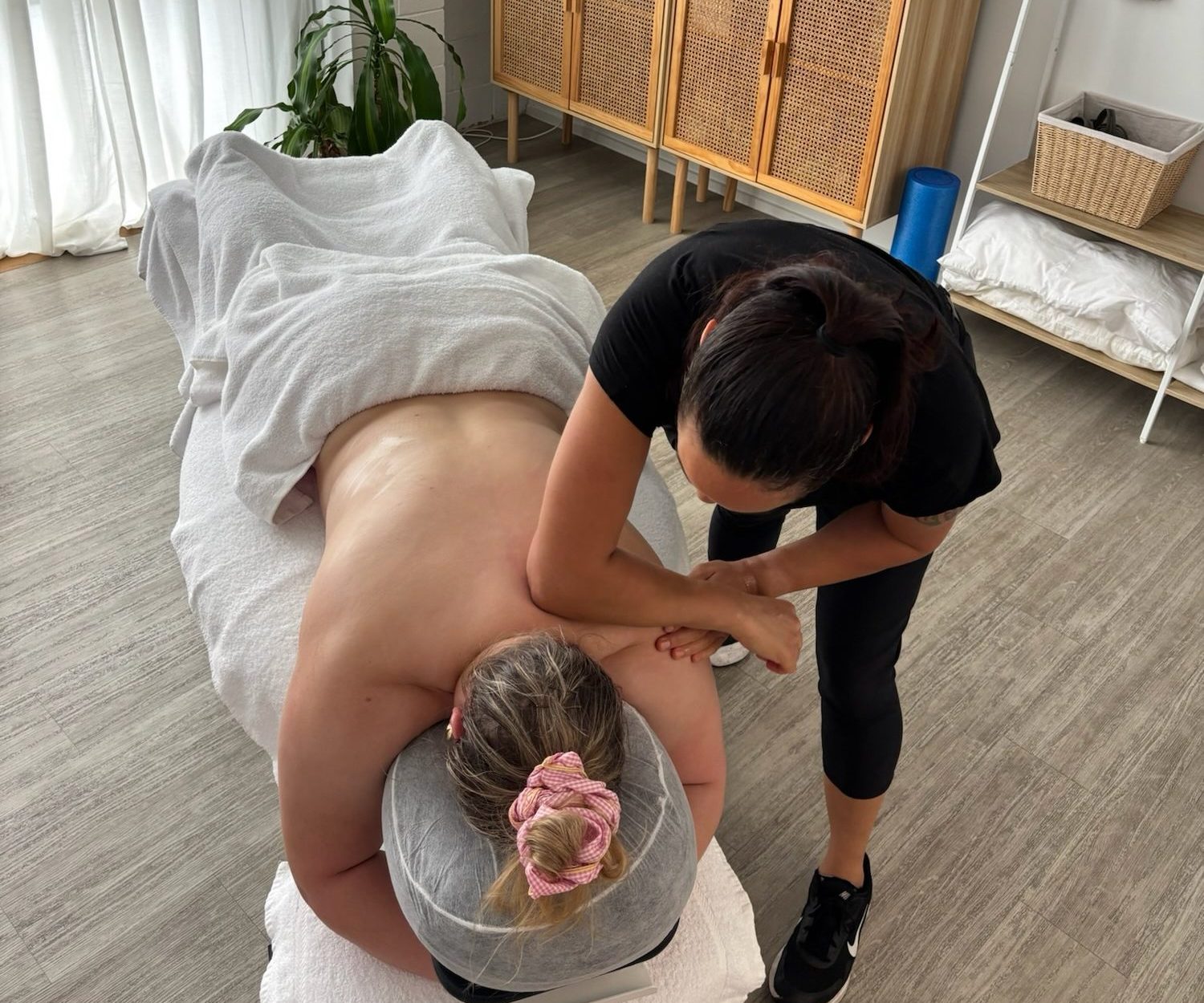

When most people think about massage, they think about muscles being loosened or tension being worked out.
But under the surface, a fascinating combination of neurological, mechanical and chemical processes are taking place throughout the body.
Massage therapy is not just about applying pressure to tight areas. It interacts with the nervous system, connective tissue, circulation and even the brain’s perception of pain. Understanding what actually happens in the body during treatment can help explain why massage often improves both how we move and how we feel.
The Nervous System Begins to Downshift
One of the most powerful effects of massage happens within the nervous system.
Modern pain science tells us that tension and discomfort are not always caused solely by muscles themselves. Often the nervous system increases muscle guarding when it senses stress, fatigue, injury or threat.
During massage, pressure and movement stimulate mechanoreceptors in the skin, fascia and muscle tissue. These receptors send signals to the central nervous system indicating that the area is safe to relax.
This sensory input can help shift the body from a sympathetic state, commonly known as fight or flight, toward a parasympathetic state, often described as rest and repair.
As the nervous system settles, people often experience slower breathing, reduced heart rate, decreased muscle guarding and an overall sense of calm.
Sometimes the muscle is not the primary problem. The nervous system maintaining tension may be the real driver.
How Massage Influences Pain Signals
Massage can also influence how pain is processed in the body.
A well-known concept called the Gate Control Theory of Pain helps explain this effect. When pressure receptors in the skin and muscles are stimulated, they send signals to the spinal cord faster than pain signals travel.
These non-painful signals can partially block or dampen pain messages travelling toward the brain, effectively turning down the intensity of pain perception.
This is one reason people often feel relief during or shortly after treatment, even before deeper tissue changes occur.
Pain is not simply a direct signal from injured tissue. It is a complex interpretation created by the brain based on multiple sensory inputs. Massage adds new sensory information that can change how pain is experienced.
Muscle Spindles and Golgi Tendon Organs
Two important sensory structures within muscles help regulate tension and movement.
Muscle spindles monitor how quickly and how much a muscle is stretching. When they detect rapid stretch, they trigger a reflex contraction designed to protect the muscle from injury.
Massage techniques that involve slow, sustained pressure can reduce excessive spindle activity. This can allow the muscle to relax rather than constantly guarding.
Another structure known as the Golgi tendon organ sits near where the muscle meets the tendon. These receptors monitor tension within the muscle.
When tension becomes very high, the Golgi tendon organ can signal the muscle to reduce its contraction. Some therapeutic techniques may help stimulate this protective reflex, encouraging muscles to let go of excessive tension.
Together these sensory systems act like internal regulators of muscle tone. Massage interacts with these systems by providing controlled mechanical input to the body.
Fascia and Connective Tissue Adaptation
Muscles do not exist in isolation. They are surrounded and connected by a continuous network of connective tissue known as fascia.
Fascia wraps around muscles, nerves, organs and joints, helping distribute force and coordinate movement throughout the body.
When fascia becomes stiff, irritated or restricted, it can contribute to sensations of tightness and reduced mobility. Mechanical pressure, movement and stretching applied during massage may help improve tissue glide between these layers.
Research suggests that manual therapy may stimulate fibroblasts, the cells responsible for maintaining connective tissue structure. This may help support tissue adaptability and improve movement efficiency over time.
Fascia has become an increasingly important topic in movement science, and understanding its role can help explain why treatment sometimes affects areas beyond the exact location being worked on.
If you’re curious about connective tissue, you can explore this further in our follow-up article: What Is Fascia and Why Does It Matter?
Circulation and Fluid Exchange
Massage can also influence circulation within local tissues.
The rhythmic pressure applied during treatment may temporarily increase blood flow and improve microcirculation, allowing oxygen and nutrients to move through tissues more efficiently.
It may also support the movement of lymphatic fluid, which plays an important role in immune function and tissue maintenance.
However, it is important to clarify a common myth. Massage does not “flush toxins” from muscles. The body’s detoxification processes are primarily managed by the liver and kidneys.
What massage can do is support the movement of fluids within tissues, helping maintain a healthier environment for muscles and connective tissue to function.
The Brain’s Body Map
Another fascinating aspect of manual therapy involves how the brain maps the body.
The brain constantly maintains a sensory representation of different body regions. When an area becomes painful or injured, the brain may increase protective sensitivity in that region.
Massage provides new sensory input to the brain through touch, pressure and movement. This can help update or refine the brain’s internal map of the body.
When this sensory information changes, the brain may reduce protective tension or perceived threat in that area. This is one reason people sometimes notice improvements in movement or comfort after treatment.
Changes in Brain Chemistry
Massage therapy can also influence neurochemicals associated with mood and stress regulation.
Research has shown changes in several key neurotransmitters and hormones following massage treatment, including increases in serotonin, dopamine and oxytocin, along with reductions in the stress hormone cortisol.
These changes may help explain why massage often improves mood, sleep quality and overall relaxation.
Massage is not purely a mechanical treatment. It is also a neurological and biochemical experience.
The Bigger Picture
When we zoom out, massage therapy is far more complex than simply “loosening tight muscles”.
It interacts with multiple systems in the body simultaneously:
• the nervous system
• connective tissue and fascia
• circulation and fluid movement
• sensory feedback to the brain
• chemical and hormonal responses
This combination helps explain why people often experience improvements not only in pain, but also in movement, relaxation and overall wellbeing.
Understanding the science behind massage helps highlight why skilled manual therapy can play an important role in supporting musculoskeletal health.
If you’d like to dive deeper into connective tissue, click through to our follow-up article “What Is Fascia and Why Does It Matter?” where we explore the fascinating world of fascia and how it influences pain, posture and movement.
References:
Field, T. (2014) Massage therapy research review. Complementary Therapies in Clinical Practice, 20(4), pp.224–229.
Melzack, R. and Wall, P. (1965) Pain mechanisms: A new theory. Science, 150(3699), pp.971–979.
Schleip, R., Findley, T., Chaitow, L. and Huijing, P. (2012) Fascia: The Tensional Network of the Human Body. Edinburgh: Churchill Livingstone.
Weerapong, P., Hume, P. and Kolt, G. (2005) The mechanisms of massage and effects on performance, muscle recovery and injury prevention. Sports Medicine, 35(3), pp.235–256.
Best, T., Hunter, R., Wilcox, A. and Haq, F. (2008) Effectiveness of sports massage for recovery of skeletal muscle from strenuous exercise. Clinical Journal of Sport Medicine, 18(5), pp.446–460.
Moyer, C., Rounds, J. and Hannum, J. (2004) A meta-analysis of massage therapy research. Psychological Bulletin, 130(1), pp.3–18.
#MassageScience #GoldCoastMassage #GoldCoastBusiness #Science
 nxtlevelih.com